Facilitating Your Family

A couple of colleagues mentioned in social media posts before the holidays that it is very challenging to facilitate family members – that chaos can erupt very quickly. 

I was reminded of a story of facilitating my family years ago.  My parents were still living on our small family farm, but we all knew they were getting toward the end of their lives, and that the farm would eventually belong to me and my siblings.  My siblings had some strong ideas of what they wanted the farm to be like, and they wanted everyone else to agree.  At the same time, they were suspicious of formal facilitation, equating it with manipulation. At Christmas one year they asked me to tell my father what he should do, since they had an idea that my father thought a lot of me and would be more likely to agree with what I said.  As a facilitator, I really resented their attempt to force me to manipulate my father, or anyone. But I knew that starting to use a formal method with my usual upfront working assumptions would turn them off. 

So when we were all sitting around the table after dinner, I casually picked up a spoon and said, “we are going to use this spoon as a talking stick.  Each person in turn around the circle will have a chance to speak about what direction we want the farm to go in.  While you have the spoon, you can talk uninterrupted.  But when you finish, you hand the spoon to the next person, and it is their turn to talk uninterrupted. You don’t have to agree, just listen while the others are talking.” 

My father immediately said, “Can I go first?”  I handed him the spoon, and he talked in some passionate detail about his vision for the farm.  It was exactly what my siblings had said to me before the meeting! The spoon went around the circle very quickly after that, as all that was needed to add was some detail and specifics that clarified the vision. 

The tool was so relaxed, no one could accuse me of using facilitation tools.  But that was exactly what I did.  Everyone heard each other, and consensus was reached without chaos.

Several years later, we needed a detailed strategic plan to move the farm plans forward.  This time they allowed me to use a formal method.  They participated fairly well, but were easily distracted, and the commitment to carry out the plans did not have their hearts in it. 

I learned from these experiences that sometimes, and especially in families, it is much more productive to use casual, informal methods, quietly guiding the group to speak and listen, than to use a formal method.  The main intent is to make sure everyone gets a chance to speak, and that the common patterns can emerge, as well as making sure the differences are also heard. 

In case you wonder, the final result of all the family consensus and work was that after my parents died and my brother, who had stayed on the farm, was ready to retire and leave it, we siblings collaborated to turn the farm into a publicly owned and managed nature preserve.

Posted in Facilitation Stories, Personal Stories, Uncategorized | Tagged , , , | 1 Comment

The Power of Metaphor to Shift Images: Story, Song, Symbol

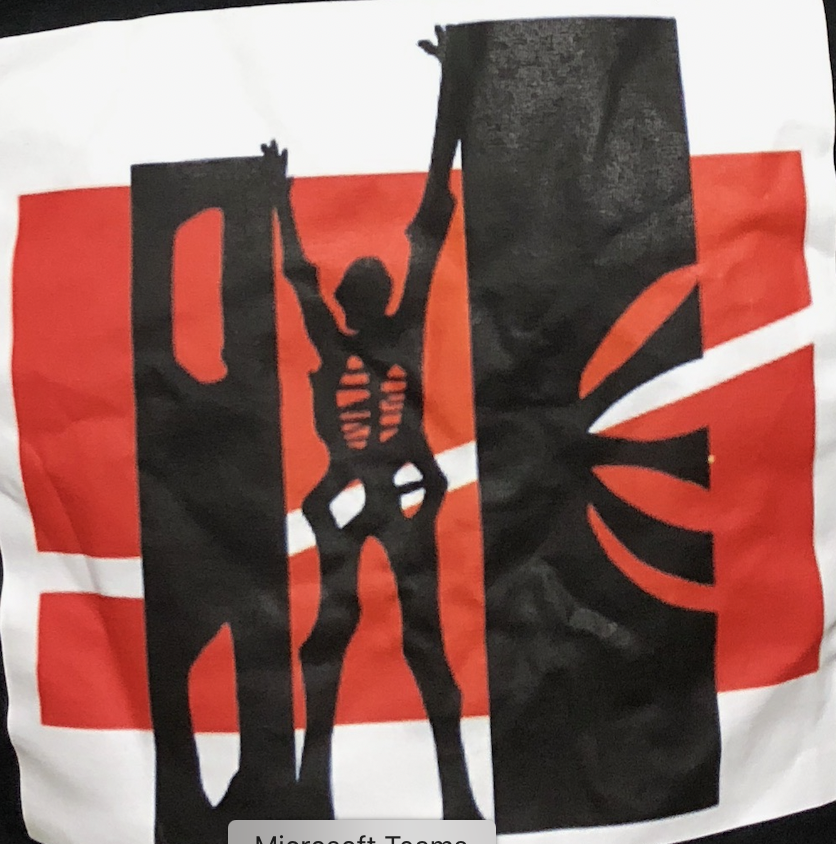
(Image of the Iron Man statue in the 5th City community in Chicago)

I was reminded of the event below when teaching the course The Power of Image Change.  In the course, we talk about how underlying images of self and the world guide behaviour, that messages can change underlying images, and when underlying images change, behaviour changes. We also explore how metaphor and other ways of giving messages are often more effective than verbal messages. 

Years ago, ICA did lots of participatory events in communities, often one-day events where a range of community people came together for a festive community forum to create a community vision, articulate obstacles to the vision, and create strategies to address the obstacles.  (That process was an early use of what came to be the ToP Strategic Planning process.) In these events, a small group would volunteer to create a story, a song, and a symbol or logo for the community, reflecting the vision of the community.  Some incredible creative work came out of this exercise, and in many communities it continued to inspire community pride and spirit long after the event. 

A few years ago I was asked to work with a team in a school board. The members of this team were scattered throughout the system, and they had an image of themselves as lone wolves rather than a team.  The leadership identified that they needed to articulate a mission statement in order to focus their task within the system and bring them together as a team.  

We did a consensus workshop on their particular mission and purpose as a team, clustering all their individual ideas to create larger elements of their mission and purpose.  Then I broke the large group into three smaller groups to create three different results based on the core elements of the mission, the column titles from the workshop.   

One group wrote a paragraph from the core elements – a mission statement.

The second group took the core elements and created a light-hearted song, setting it to a simple well-known melody.

The third group created a logo for the group, using the core elements and turning them into graphic elements of the logo.   

Then each small group presented their results to the whole team.  Everybody was pleased with the mission statement as it drew together their insights into a succinct paragraph. 

The second group shared the song lyrics, and everyone sang the song.  It was fun, and triggered a lot of laughter. 

Finally the third group presented the logo.  The graphic of the logo held their vision of the team and its mission, and there was a gasp of recognition. 

The mission statement was printed and posted in their team space along with the logo.  The song probably was never sung again, but the laughter at singing it became a team memory. 

The very different ways of articulating their mission became messages that created a new image of the group as a collaborative team who supported each other even though they often worked alone. 

Where have you noted an underlying image that is blocking yourself, another person, or a team, where a metaphor could send a message that might unblock that image and make room for a releasing image?  

Posted in Uncategorized | Tagged , , , | Leave a comment

Reflecting on the Past Created an Aha! that Changed the Future

Our underlying images of ourself and the world have a profound effect on our mental health and our behaviour. Messages that come to us in all kinds of ways can change those images. When those images change, our behaviour changes.

I am grateful for all of the experiences I have had that have shown me how this works, and made it possible for me to be aware of my own underlying images and the messages that affect them. This is one that was very powerful for me.

A number of years ago, I was working with a First Nation in the far north who wanted to do strategic planning. 

We started with a Journey Wall (also called Historical Scan) to establish a historical context for their vision and strategic plan.  They advised me that the timeline for the exercise needed to be at least a hundred years.   The “wall” to work on was a number of flipchart pages, turned horizontally and taped together, suspended from a clothesline across one wall of the dining tent at the retreat. The participants were a cross section of the community, including young and old.  The oldest elders were fluent in their own language, but the younger ones were not because of residential schools, so we worked in English. One of the younger leaders was one of the first young ones to be educated in the community and was fluent in the language as well as English.  She was dealing with historical trauma of colonialism and the intergenerational effect of residential schools, which she was very angry about.

First the group individually brainstormed events from the last hundred or so years until the date of the planning retreat, then worked in pairs to write the different events on cards.  These cards, written in both languages, included the massive number of deaths in the community from smallpox and the Spanish flu epidemic brought in from outside at the beginning of the last century, the residential schools, the effects of these events and others as well as later the development of self-government and business ventures. They taped the event cards on the timeline, watching the journey evolve through the years.  Then they marked high points and low points on the journey, named the turning points and sections of their journey as chapters of their story, and finally named the whole journey. 

When the Journey Wall was completed, the young leader began to read out loud, translating the entire timeline into the traditional language.

She got about halfway through, and suddenly her face changed. She blurted out, “We’ve been through all of this and we’re still here?!  We’re one helluva people!”

The articulation of the journey with its high and low points had led to a powerful underlying image of the community of its strength, wisdom, and commitment. This generated new energy to make a positive strategic plan for the community.

At the end of the translation, the elders said to the group, “Now you know where we have come from, and who we are.  We will now leave it to you younger ones to plan the future.”  

The Journey Wall was documented and later made into a large poster that was hung in the community centre to educate and inspire the whole community. 

Posted in Facilitation Stories, ToP Tools, Uncategorized | Tagged , , | 1 Comment

Healing Wounds by Sharing the Journey

(Photo is not of this story, but it is a creative Journey Wall.)

Around 30 years ago, two community service organizations were serving a similar niche in an overlapping geographical area. One of these organizations was very large, with a strong hierarchical structure that managed the big reach of the organization, but it was not very effective.   The second organization was a small organization with lots of collaborative teamwork that made it extremely effective, but it didn’t reach a big clientele. The province was funding both, and decided to use its power to force them to merge. Both organizations were moved into the space that was originally the space of the smaller organization.    

5 years after the merger, there were internal tensions between the two groups of staff that were becoming intolerable, and they asked for a facilitator to help them for a day.  Most of the staff were present.

They started in the morning with a ToP Journey Wall (also called an Historical Scan, or a Wall of Wonder). The timeline went back 10 years, to well before the merger.  They worked in small groups to recall and record on cards a wide range of events that had happened in the past 10 years.  These were posted on a timeline on the wall and read out to the whole group.  They took significant time to share clarification of the events. 

As they talked about the events, one person from the originally smaller organization told the story of the staff who 5 years ago had literally moved into broom closets to make room for the people coming in from the larger organization.  Suddenly the group was silent, as they had never heard this before. At this point, some from the larger organization articulated their experience of the challenge of moving from a spacious office to a small desk. Another talked about the much longer drive to work that they had to do after the merger. This led to noting many more of the high and low points of the past 10 years.

This was brand new information for the organization as a whole.  The resentment was finally out in the open and acknowledged.  This led to a broad understanding across the organization of the shared pain of the merger.  Now they named the turning points, the sections of the journey between the turning points and finally the whole journey.  The names of the “chapters” of the journey reflected a new appreciation for the sacrifices that all had made and their commitment to the community. 

After lunch, the organization brought their hopes and dreams together through a consensus workshop and were able to envision their common future. The event ended with lots of hugs. 

Often when we are in conflict or tension, there are hidden memories and reactions that lead us to conflict and judgement of each other.  Using facilitated processes that can respectfully and safely bring these into the open can bring understanding and healing to the whole group.       

Posted in Facilitation Stories, ToP Tools, Uncategorized | Tagged , , , , | 1 Comment

Addressing a Culture of Conflict within an Organization

This post was originally posted as “Organizational Transformation through Facilitation” in June, 2015. I think it may be informative in 2025, so I am reposting it.

Once I had a client whose understanding of their mandate and mission was to fight the oppressor on behalf of the oppressed in the inner city. This was a foundational understanding for the group, based on their understanding of Paulo Friere’s Pedagogy of the Oppressed.

The staff of this organization was in chaos. They had had 5 executive directors in 4 years. Several had left out of frustration, and their work was diminished because of all the infighting within the organization.

So the acting executive director asked if I would come in and facilitate a ToP Strategic Planning process to try to create some consensus on the directions they needed to move.

The Vision workshop was pretty easy – they had a common vision of where they wanted to go. Some of the rifts became smaller.

Then came the Obstacles workshop. Having a solitary brainstorm and time in pairs to write obstacles on cards allowed them to be pretty honest about what was going on. The cards clustered intuitively relatively easily. Then it was time to name the Underlying Contradictions. As I read the cards in the first column out loud, I could see a pattern, but left it to the group to struggle with the insight. It took a very long time. Suddenly, one person in the group said, “It’s, it’s that ‘us and them’ mentality that comes from the oppressor/oppressed thinking! We’ve turned it inward and it’s destroying us!” There was a gasp of recognition from the group, and then they quickly tried to escape the power of the insight. Eventually they named it and went on to create strategies.

A year later they asked a colleague of mine to come in to facilitate a review and re-planning session – they told her that that insight had been a turning point for the organization. They didn’t like the messenger, but the message had gotten through. After that they had the same director for a number of years – the organization stabilized and was able again to serve the community.

My learning from this experience was that a group can, with appropriate process, face and name its own underlying contradictions, which then open the door to transformation. Very often the basic values a group holds dear can be the contradiction that holds them back when they need to change.

This kind of facilitation is not just about getting a rational result or a product, although that is part of it. It is about providing the opportunity for a group to become conscious of its own behaviours and beliefs, and make the profound change it needs. It is about caring for the whole person, and the whole group – its experience and growth as well as its rational products. It requires integrity on the part of the facilitator to honour the group’s unspoken needs without imposing the facilitator’s own values and perspectives.

My work has always been through the Institute of Cultural Affairs and from 1999, through its partner company in Canada, ICA Associates, Inc. http://ica-associates.ca

Posted in Facilitation Stories, Uncategorized | Tagged , , | Leave a comment

One Story of Integrity as a Facilitator

The memory of this story was catalyzed by a LinkedIn Post by a colleague who talked about her experience of the power of personal integrity as a facilitator in choosing work.

Many years ago, after a successful facilitation with a business leaders’ organization, I was asked by a VP of a major national company to facilitate a retreat for their sales managers, a big opportunity for me.  About 30 sales managers were brought from all over the country to the day-long event, which would include an evaluation of the past year and planning for the next year.

I was warned by the VP that the CEO of the company was unpredictable, so I suggested that he just give an opening welcome and then when he left the room I would do a focused conversation on his talk with the group before we moved on to the evaluation and planning.

The CEO began his “welcome” with a tirade about how the year was a disaster, that each of them was a disaster, and that they would have a new senior manager the next week, “which would not be any of you, because you do not deserve it”.  Then he did not leave the room. 

Clearly my planned conversation was not going to work, so I called a quick break.  The VP came up to me and asked, “Would you like me to talk with Charlie to make him be more positive when he comes back at the end of the day?” I asked, “Can you do that?”  He said, “It’s part of my job description, to manage him.”  I said “Yes, please do!” He and Charlie left the room at that point.

So we started the participatory evaluation of the year, using the Journey Wall/Historical Scan process. The events and accomplishments on the wall showed that they had sold more products that year than ever before, and that income for the company was higher than ever before. However, at the end of the Journey Wall, when they named the year, they named it “Disaster”.  I was astounded, and took off my facilitator hat to ask why after all the documented success, they named it a disaster.  The answer: “Well, Charlie said it was a disaster, so it was.”

I took a deep breath and started the next step of the strategic thinking/planning process.  This amazing group articulated a vision, discerned underlying obstacles, and came up with creative strategies, all before 4 in the afternoon – a process that usually takes at least a day and a half. 

Charlie came back in the room at the end of the day and his idea of being positive was to say to the group, “Well, this strategy might work, this one’s maybe ok, but this one will never work!”

After finishing and cleaning up, I was leaving and found myself alone in the elevator with Charlie and the VP.  I had been coming down with a serious flu during the day, and by this time I had a high fever and had lost much of my inhibition. I said to Charlie, “I have learned that what you tell people about them they will do their best to live up to. If you tell them they are a disaster, they will do their best to be a disaster for you.  If you tell them honestly what they do well, they will work even harder to do those things well for you.”  

As I walked out of the elevator, I knew that I would never do any more work for that company. Partly because I had told off the CEO and that of course is taboo, but mostly because I will not work for or support anyone or any organization who does not respect people.

Posted in Facilitation Stories | Tagged , , , , , | Leave a comment

“No Time for Planning a Meeting”

I have heard this more and more often. Huge demands for productivity in meetings, but less and less time allotted to them. Here is a story of a team’s discovery about the impact of taking time to prepare a meeting.

A company department with strict productivity rules had sent a whole team to be trained in facilitation, one day per week for 2 weeks.  It came up during the first day of the course that they had very long, unproductive team meetings. 

At the end of the first day of the course, during the discussion on how to implement the focused conversation method they had just learned, they expressed dismay that it took time to prepare for a productive meeting.  They mentioned that there was not time in their job descriptions to prepare for meetings, and there was strict accountabilility for their time.  So I asked when their next meeting was scheduled – it was in a few days, before our next session. I suggested that one of them sneak in an hour to prepare a conversation for the meeting, and then facilitate it. 

The next week when we met, they were ecstatic!  “Our meetings of 10 people usually last 2 hours and rarely have any good results.  This time we used the conversation that was prepared, the meeting took only 1 hour, and we had very good results and decisions for moving forward.  We saved 10 person hours of time with 1 person hour of preparation!  We can make a business case for adding meeting preparation to our job descriptions, because we have demonstrated productivity!”

Posted in Facilitation Stories, Uncategorized | Tagged , , , , | Leave a comment

Addressing Distrust in a Public Consultation with a Focused Conversation

A school district needed to address the fact that some schools were very old and needed very expensive renovation, and that there were new neighbourhoods in the city that needed new schools.  The budget was limited and not everything could be done.

I had trained people in participatory methods, and they tried to create a plan with some community consultation.  When the senior staff had a plan in place, they decided to go to all the communities and get feedback on the plan.  They asked me to design a process for them to use with all the communities, which consisted of sharing the plan and then doing a focused conversation on it.  They then asked me to facilitate several of the more challenging sessions.

One high school to be closed was an arts focused school, that drew students from all over the city.  It had passionate parent and community supporters, about a hundred of which showed up for the feedback session, seated in the theatre in tiered seats facing the stage. There was a lot of confusion and anger, led by one particularly vocal person.

 The plan was that the director would present the plan to the large group, answer questions of clarity, and then there would be smaller breakout groups that did a focused conversation on the presentation, each facilitated by a trained staff member.  But the group refused to go to the breakout groups. 

So we changed the process to address the issue.  I called for flipcharts, and put up all the questions of the conversation on separate flipchart pages, leaving room for answers under the questions.  

First the presentation was made.   Then I asked for questions of clarification, which came in attack questions such as “Why the hell are you closing our school?!!!”.  Thankfully, the director stayed cool, and I rephrased the questions as questions of clarification, such as “What was the thinking behind the plan of closing our school?  And “What values were you holding to make this decision?”  The director answered these questions.

Then we went through the rest of the focused conversation in order, capturing the answers on the flipcharts. Reflective level questions were something like “What upsets you the most about this plan?” And What are you OK with?” At the interpretive level the questions were something like “What might be the impacts of this plan on our community? (positive or negative)” and What might be the impacts of this plan on the whole city? (positive or negative)”.  At about this stage, I realized that the most vocal and angry person had not said anything for a while, so I asked her directly if she had anything to add.  She said she had nothing more — it had all been said.  The decisional question was something like “What recommendations do we have that will strengthen the positive impacts for this community and the city, and address the negative impacts?”  A few creative suggestions came forth and were recorded.

The feedback was valuable and the group felt heard.  The documentation went directly to the school administration.   

Posted in Facilitation Stories, Useful Conversations | Tagged , , , , , | 1 Comment

History of Developing the ToP Action Planning Process for Strategic Planning

In 1988, non-profit organizations were required to have a strategic plan in order to get their funding from the province for the next year.  Wayne and I facilitated ToP strategic planning for each of 12 regional non-profit organizations that were connected by a provincial organization in 12 weekends between January and the end of March.  

We facilitated Vision, Obstacles, and Strategies, then asked people to work on an action plan for each strategy.  We started with the simple 3-page Task Force Action Planning workbook that had been developed by ICA earlier (see the overview above or https://ica-associates.ca/news/top-task-force-action-planning/ ) for each strategy.  We discovered that although the process was very grounded, simple and step-by-step, people could find all kinds of ways to escape doing concrete action planning that would get results.

So we adapted the workbook each week as we encountered new ways people were escaping.  First we discovered that people would name a vague “committed to” on the bottom of the first page.  So we changed the words to “measurable accomplishment by ‘date’”    Then we discovered that people would turn to the second page and brainstorm anything they wanted to do, whether or not the actions were related to the accomplishment they had decided on the first page.  So we added a line at the top of the second page to copy the accomplishment where it was visible next to the brainstorm space. On the third page we changed “victory complete” to “measureable accomplishment”, and the “who” to “implementing team” and added “money” and “time” to the “cost” at the bottom of the 3rd page. 

This story explains why the Action Planning Workbook in the Transformational Strategy course is complex – it is designed so that it makes it very difficult to avoid making grounded, achievable plans with practical actions that the whole team is committed to carrying out.

There are even more complex adaptations that evolved later on with other clients with specific needs: such as adding 3-, 2- and 1-year accomplishments and 6-month milestones; and a table that names each measurable accomplishment, indicators of success for that accomplishment, and its relationship to vision and strategies.

For more on the action planning process to use with strategic planning, ICA Associates has a training course called Transformational Strategy that includes participatory strategic planning and the more detailed action planning. https://ica-associates.ca/courses/transformational-strategy/

Posted in Facilitation Stories, Uncategorized | Tagged , , , , , , , | Leave a comment

Listening to Polarized Viewpoints and Creating Consensus

Currently we are more and more aware of social issues facing our society – such as addictions as in alcohol, gambling, and illegal drug use; as well as unemployment and job loss, housing, etc.  Many social issues trigger emotional responses and a feeling of helplessness leading to difficulties and strong polarization in conversing individually (family), locally, and nationally around these social issues.  Here is an example of a process for dialogue leading to overcoming or minimizing polarization (and a feeling of helplessness and isolation) around just one such social issue.  It happens to be a real live process in dealing with gambling–but it has roots and tentacles that could be used for almost any social issue.  

A number of years ago, a government body decided to do a public consultation on gambling.  A team was put together to facilitate it. My role was that I had trained the facilitators in the methods, and helped design the process, but I was not there personally.  It was one of those rare events where a wide spectrum of people was invited to contribute their perspectives. Participants included people who were absolutely against any gambling, and others who were absolutely for it, as well as people whose views were somewhere in the middle.

To accommodate a lot of participants, there were several large breakout groups, each of which used the same consensus workshop processes in a series of consensus workshops.  These results were brought together at the end.  

For one of the consensus workshops, the focus question was something like “What are all the impacts of gambling?”  Participants were asked to brainstorm all impacts, both positive and negative, and put a plus or minus on their cards when they wrote them. Brainstorming in this way to this neutral focus questions allowed radically opposed ideas to be articulated.  Questions of clarification when necessary were answered by the small group who wrote the cards. The clustering then was by “similar impact”, not whether it was positive or negative. Most cluster columns then included both positive and negative cards about the impact and the cluster was named neutrally as a larger impact, acknowledging that it had both positive and negative aspects. 

The results on the cards including the larger impacts on the cluster names were captured verbatim in simultaneous documentation by a person on the facilitation team at the back of the room, (this was before digital cameras were common, and way before cellphone cameras).  The documentation was printed and distributed to the participants at the end of the event.

The conversation in the plenary session came up with several recommendations for action.  

Two amazing outcomes:

Experiential outcome:

At the very end of the session, two people, one known to be strongly against gambling, and the other known to be strongly for it, were overheard saying something like this in front of a third person, “We are shaking hands, and we will continue to talk and listen to each other.  Before this session, we never would have spoken to each other.”

Rational outcome:

A couple of days later, a sponsor of the session called the lead of the facilitation team and asked them to keep all the results private until the results could be massaged for the report.  The reply was that it was too late – that all the participants had already gone home with the verbatim results that had been documented as the work was going on. The sponsor was in this way held accountable to hear and reflect the outcomes of the group.  Within a year all but a few of the recommendations had been approved by the sponsor and a process of implementation begun.

Keys to the success of this session: 

1) 1) The Working Assumptions shared at the beginning of the process made it clear that every response would be respected and heard. (See Working Assumptions post from 2015.)

2) Making sure (through the brainstorming and clustering process) that the whole spectrum of responses was heard and held in the results, allowing people to experience that they were heard, and that everyone heard other perspectives. (For a concise description of the basic process, see https://ica-uk.org.uk/wp-content/uploads/2020/04/Consensus-Workshop-Overview.pdf )

3) Making sure that the words that people said were documented and shared with participants at the end of the session so that the actual results became the foundation of the decisions by the sponsor afterward and that nothing was ignored.

4) Design of the process allowed safety in speaking, promoted listening and hearing to what was actually said. The process/listening allowed people to not focus on rants or positions but on the thinking and observations on what was really happening to people.

5) A focus question was open enough to allow all perspectives to be held and to be clustered to see larger patterns.

6) Clustering of the ideas was done by similar topic, allowing both positive and negative responses in the same cluster, therefore acknowledging the different perspectives while emphasizing the similar areas of concern.

7) There were tangible and documented results that demonstrated that people were heard, and that their ideas were part of the solution.

Posted in Facilitation Stories, Uncategorized | Tagged , , , , | Leave a comment