Ordinary People Making a Difference: Inez Killam’s Story

Inez Killam’s Story

The Child Advocacy Council in Camden County, Missouri, sponsors a program each year called “Christmas Is Sharing.”  The sign up for help averages over 350 families and over 900 children each year.  One of my favorite stories from Christmases past is this one:

In delivering Christmas presents to the needy family that Child Advocate Maggie adopted, she discovered that the family had a huge tree with many presents already wrapped and under the tree.  Maggie was thinking that maybe the children didn’t need all of the packages that were in the trunk of her car.  She was beginning to feel a little angry, too, that this family had asked for help, but followed the mother into her kitchen with the boxes of food.  The mother turned to Maggie with tears in her eyes, thanked her for her generosity, and asked if she could give Maggie a hug.  When Maggie commented on the size of the tree, the mother proudly whispered to Maggie that the tree had been cut in the hills behind their house and the presents under the tree were boxes of the children’s favorite snacks and cereals.  She said that they had so little to spend on their children that they could only afford the “good snacks” and “real cereal” once a year; they wanted to give the children something that she knew they wanted.  Maggie looked under the tree and realized what she was actually seeing.  She and the woman unloaded the toys and clothing from the car and Maggie took off feeling she had not done enough for this family.  Maggie made a return trip to the home the next day, bringing food cards, gas cards, and winter coats for the entire family.  In retelling this story Maggie always cries and prays that what she surmised initially about this family is forgiven.  What she remembers most is one of the children saying, “Are we going to get REAL presents?”

Posted in Uncategorized | 1 Comment

Ordinary People Making a Difference: Kaze Gadway’s Story

Sitting with the Homeless  (by Kaze Gadway)

Gabriela left the homeless population two years ago. After her one daughter died in a car accident, she become addicted to heroin and lost her job. After being evicted, she started living on the streets.

After eight years, she turned around and worked with a sponsor to get off drugs and into a rehab program. She moved into a Title Eight apartment and began to volunteer her time with the homeless in Albuquerque.

I met her at the park where many homeless people sleep at night and sit during the day. She buys water with her limited income and sits at a park table to talk to people and hand out water.

Everyone likes to sit down and talk to her. She has lived on the street and gotten out. She speaks her native Spanish to the Latino population and English to everyone else.

Although she has several physical problems including a Bi-polar diagnosis, she doesn’t give up on awarding dignity to a population that is often treated as invisible. She visits the homeless on the streets every week and volunteers to hand out food daily at a soup kitchen.

I ask her what keeps her going. She tells me “It is not much but at my age it is something I can do to spread hope.”

She does not change the system of homelessness. Her presence has a ripple effect among those who have few to care for them individually. I hold her up as an unsung hero of presence in a community of indifference.

Posted in Uncategorized | 1 Comment

Ordinary People Making a Positive Difference: Heidi Zahrt’s Story

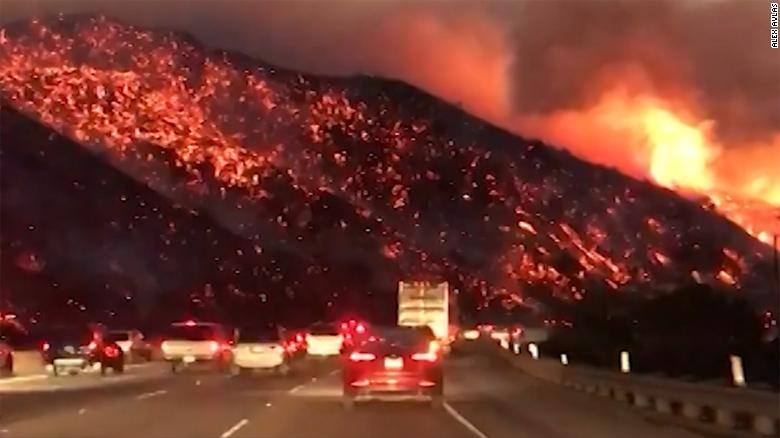
171206124100-02-ca-wildfire-405-exlarge-169

About a week ago, a fire started on the hills at the outskirts of my city.  Most of the city was not in danger, but emergency responders decided that large sections of the city adjacent to the hills should be evacuated.

The evacuation order was announced shortly after the fire began, and the winds were relentless. People packed and left quickly. Traffic jams occured on the few roads out of the area.  The sky turned black with smoke and was illuminated by red-hot flames.  During evacuation, some people who had just completed a Community Emergency Response Team training decided to jump right in and help calm people and direct traffic.  A few others of the neighborhood CERT teams decided to check on people who may need assistance.  All were evacuated with no harm, but there was confusion about where to go and how long they would be out of their home.

The next day the evacuation order still held, but people were desperate to get to their homes for forgotten medications or pets left at home, and just to reassure themselves that the house was ok. The Sheriff arranged a system and asked for volunteers, to support traffic control and escort residents to homes for a quick check and get meds, etc.

People in line were just about frantic for their health, their pets, their property.  It was made more tense by the length of the line and the time of waiting to be next in line to be escorted to their home.  Volunteers from several trained agencies showed up. They walked along the stopped lines of traffic, talked to residents. Listened to harrowing stories, worries and frustration.  Offered water to drink. They gave up-to-date information on the process and time expectation for the line to move up.  At the front of the line, several volunteers were assisting the Sheriff deputies by riding and escorting the residents to their homes.  Some of the volunteers just calmly sat in the shade and held pets while people visited their homes.

For the volunteers, it seemed like not much of a job to do, but the residents were so thankful.  The feeling of having a reassuring presence, knowing there was order and a procedure and that people were being listened to and cared for changed the whole perspective of this day of waiting.  After our day of working with the residents, we heard such grateful comments.  I heard from the volunteers what a gift it was for them to receive the appreciation and gratitude from the evacuated residents.  Each volunteer was so uplifted to have given their support to the people when needed and sharing the positive spirit to keep the calmness and comfort in the community.

By the end of the second day after the evacuation, the residents were allowed to return to their homes.  The fire had moved in a direction away from our town.

I am grateful for the volunteering community who rises up to meet the needs of the moment.

Posted in Uncategorized | Leave a comment

Ordinary People Making a Positive Difference

This is one of many stories from a wide variety of sources and a multitude of forms contributed by people upon request for my 70th birthday.   They will be posted without editing, with the attribution that was with them.  

I will be posting these regularly until they run out next year sometime: if you have others to add, please send them to me.

Refugee sponsors welcome Syrian family to Canada

 Story from CBC news, Nov. 21, 2018

They’ve only been in Canada a short while, but a group of Syrian refugees living in Brockville, Ont., is already paying it forward by sponsoring a family of eight from their homeland.

Khaled and Aveer Sultan and their six young children arrived at the Ottawa International Airport Tuesday to cheers, tears and hugs from their sponsors, who pinned tiny maple leaves to the newcomers’ lapels.

The sponsors will act as guides, translators and an extended family to the Sultans as they adapt to their new life in Brockville.

“This family is like my brother, like my family,” said sponsor Omar Alahmed.

The five sponsor families have their own worries about relatives left behind in precarious circumstances, but say they decided to open their arms to strangers because of the way Canadians welcomed them.

“Canadian people did not know me, but they helped me,” said sponsor Ahmad Alkafrei, who arrived as a refugee in January 2017.

The sponsorship program the families are taking part in is administered by the Refugee Hub at the University of Ottawa and funded by two charitable groups, The Shapiro Foundation and The Giustra Foundation, as well as six other donors in Canada and the U.S  Together, they’re donating  $3.5 million dollars to 150 sponsor groups across the country to support the resettlement of 685 refugees, drawn from a list compiled by the United Nations.

Kailee Brennan, an outreach officer with the Refugee Hub, first met the families in August at a recruitment event in Brockville. They came hoping to bring their own relatives to Canada, Brennan said, but soon learned that’s not how the program works.

“Of course, many of them had left family behind, and it’s always so difficult to explain that.” Brennan said.

After a prolonged discussion in Arabic, the translator, Brockville businessman Ahmad Khadra, declared the group had decided to open their arms to a family they didn’t know.

“I told them, ‘You are not a refugee anymore. You are now 100 per cent Canadian, and Canadians love to do something good,'” said Khadra, who came to Canada from Syria in 1995.

Khadra was also at the airport Tuesday, handing out cups of strong Syrian coffee to the new arrivals.

The sponsors have rented a furnished apartment in Brockville for the Sultan family, and will be close by to help them access food, clothing and medical care. They’ll also be able to point them to the best places for Arabic food and other small comforts that will help the family ease into their new life in Canada.

https://www.cbc.ca/news/canada/ottawa/syrian-refugees-brockville-ottawa-1.4913571


Posted in Stories of Ordinary People Making a Positive Difference | 1 Comment

Invitation to a Storytelling Party: Ordinary People Making a Positive Difference

Front Yard Greeting

This post is the context for the stories that will follow in this blog and on social media.

Context:

My 70th birthday is coming up in November.  Last year my sons said they would support anything I wanted to do for my birthday celebration.  So I’ve been thinking about this for some time.  I would like this event to symbolize my gratitude for all that has brought me to this point, and to give something back to the world in that gratitude.  I’m inviting you to participate.

Over the last year, and particularly the last few months, I have experienced deep despair about the future of the world.  Constant negative news about economic, political, cultural, environmental events and forecasts have had a huge impact on me.  And when I talk with others, there is a near universal response of “I’ve experienced the same thing”.  Many of the events we hear about seem to be beyond our control.

At the same time, every so often, stories crop up of something that ordinary people are doing in their communities or beyond, that make a significant difference in people’s lives.  Many have huge ripple effects. These give me hope, and are the antidote to despair.  The more I look for them, the more I see and hear. This fits with my life-long observations that significant change begins with ordinary people, generally at the local level.

I am thinking that what the world needs to counter the despair that paralyzes us is to hear real, grounded stories of how ordinary people are making a positive difference for others – their communities and beyond.  And as I look for these stories, my sense of our capacity to make significant change begins to return.

Invitation to the Storytelling  So as my gift back to the world, I propose to host a birthday party event on Sunday November 25 that is a storytelling event.  It can include people who can physically attend, as well as all my friends, colleagues, and family globally who can participate virtually by sending their stories to me.  The face-to-face storytelling event is inspired by the “Swamp Gravy” process from Colquit, Georgia, where we share stories with each other using active listening.  Those who are present can tell their stories to each other, and we will also share stories sent in by those who can’t attend.

Here’s what I’m asking of you to do as a gift to me and this process over the next 2 months: look everywhere for stories of where ordinary people are making a positive difference in others’ lives, and capture them.  Tell the stories in your own words, and write them down.  These can be very local stories, like the one of Peter in my neighbourhood who saw that the park across from his house was becoming a place for vandalism and drug deals, and organized the “Friends of Stephenson Park” to create eventfulness year-round that makes the park a community-friendly and cherished space, and brought together neighbours that wouldn’t have spoken otherwise.  Or they can be stories that make the news, like the Parkland school shooting students who are organizing young people across the US to register and vote, giving voice to a powerful new force.  Or the global stories of “Free to Run”, which has engaged young women in Afghanistan and other cultures to run long distances together, inspiring other young women to claim their freedom.  They can even be stories of what YOU are doing.

I will capture the stories we collect and tell each other on a blog afterward, and share them at regular intervals on social media, email lists, and other modes, to inoculate all of us against despair, and inspire more local action.


Posted in Stories of Ordinary People Making a Positive Difference | 1 Comment

Turning A Story of Challenges into a Story of Delightful Discoveries

On New Years Eve, 2017, I was celebrating the completed publication of Getting to the Bottom of ToP: The Foundations of the Methodologies of the Technology of Participation with a colleague. The last year of getting the book published was extremely challenging, and I have been stressed with having to deal with one obstacle after another. As I was talking with her, I realized that there were several amazing events of synchronicity that happened during the publication journey. I suddenly realized that I could shift my story to emphasize the high points rather than the struggles.

One such event was discovering the book At the Existentialist Café: Freedom, Being, and Apricot Cocktails as I read the books section of the newspaper. Sarah Bakewell not only describes phenomenology and existentialism in plain language, but also includes biographical sketches of the philosophers, which provides relief from the intensity of understanding their philosophy, and insight into what motivated them. I thoroughly enjoyed the book, and ended up using quotes from her book as section and chapter titles.

Another event was even more synchronistic. IAF (International Association of Facilitators) asked me to go with a team to present at a conference of NCDD (National Council on Dialogue and Deliberation). When I arrived at the conference, I saw a name that I recognized – 25 years ago I had had many interesting interchanges on an early IAF listserv with Rosa Zubizarreta, but I had never met her in person. So as soon as I could find her, I connected and we enjoyed continuing our conversation. Then, at a table, she started to talk to another participant about her mother, who had done bilingual education in California. When she gave her mother’s name, I gasped. In writing my earlier book, Art of Focused Conversation for Schools, a colleague had sent me a book by Alma Flor Ada which had a guided conversation method she had created for classrooms (in both Spanish and English) which mirrored the focused conversation method and I had quoted her extensively. I had no idea that she was Rosa’s mother! Then Rosa introduced me to Tom Atlee, with whom she had collaborated to publish The Tao of Democracy: Using Co-Intelligence to Create a World that Works for All. Tom’s book was in the conference bag, and upon reading it, I realized that he had some rare insights into how the methods work with groups. I also used a quote from his book to introduce Section 2.

Although the journey of writing, editing, and publishing this book was difficult, I learned a great deal that I had not anticipated in the process. And this is a story of success, not of challenges alone.

(Getting to the Bottom of ToP, by Wayne and Jo Nelson, is now available from iUniverse.com  and also from Amazon.com)

Posted in Personal Stories | Leave a comment

It’s Hard to Predict the Impact of a Facilitated Event

On October 20 this year, I attended the “Courage to Lead Award” event held by ICA Canada, the charitable organization that is  co-owner of ICA Associates, Inc.

The award was to be given to a woman I didn’t know, Anne Gloger, who is the CEO of a remarkable grassroots, inclusive, diverse, participatory community organization in Scarborough, Ontario, called The Storefront.

Before the event began, I noticed the woman coming over to me with deliberate intention.  When she got to me, she asked with intensity, “Did you facilitate an event at the 519 Community Centre in Toronto in 1999?  I remembered the unique building, although I didn’t remember what I did, or anyone who was there, so I said “Yes!”  She said “That event was the inspiration for everything I have done here at Storefront!”  I gave her a big wordless hug, as I was so blown away by what she was saying.  Then in her acceptance speech for the award, she showed a slide of the Working Assumptions that I created and use, and told a story that I had told back then, 18 years ago.

It is certain that whatever I did at the 519 did not have the stated aim of inspiring someone to go out and create such an organization.  But the simple use of respectful, participatory consensus methods inspired her to do great things, far beyond anything I could have imagined.

Thank you to the Universe for allowing me to catalyze respectful, inclusive community development well beyond the mundane.

Posted in Facilitation Stories, Personal Stories | Leave a comment

Remembering the MLK Weekend, April 6, 1968

MLK Weekend, April 6, 1968

49 years ago, I participated in a history- and life-changing event on the West Side of Chicago.

I was 19 years old, in my second year at the University of Iowa, and traveled with my campus Wesleyan Foundation group to take a course called “Cultural Studies I” at the Ecumenical Institute on the West Side of Chicago.

The day before the course was scheduled to begin, Martin Luther King was assassinated. From our small-town Iowa perspective, though, we saw no reason not to go to Chicago for the course.

When we arrived in Chicago after a 5-hour drive on Friday, it was clear that the assassination had catalyzed unrest, but it wasn’t clear what was going to happen. The others in the car decided to turn around and go home, just in case. My brother and his family (David and Linda Zahrt, Jay and Heidi) were working at the Institute, and they weren’t fleeing, so I decided to stay.

The first session on Friday evening began as scheduled in a lower floor room with windows at ground level.  I remember sitting next to what seemed to me to be an older man, Sheldon Hill, and thinking “there is no generation gap”, because we seemed to be on the same page of understanding. As the session progressed, we heard shouting out on the street and saw legs running by with gun barrels.

After the session ended, I went up to my dorm room and looked out. I could see fires burning within a block or so on 3 sides of the building, and on the fourth side was the Eisenhower Expressway filled with cars getting out of the city.

I went to my brother’s apartment to talk with him and hang out with family. I didn’t want to be alone, as it was pretty scary and I was stranded. After a little while there was a knock on the door, and we were told everyone was evacuating the building, as someone had broken in and tried to start a fire in the building.

There was a long-unused tunnel between the Institute campus and a hospital across the street. Somehow the tunnel was opened and we all went across to the hospital basement. By this time almost every participant had escaped via the expressway, so there were only a couple of participants and Institute staff. My brother and sister-in-law asked me to watch their two small children, who were wild with the energy around us. At various points the National Guard would come in to get coffee, and smoke would roll in with them. Someone had a radio, and we heard that inner cities were burning all over America. It felt like Armegeddon.

At daybreak on Saturday, when the rioters were exhausted and it was a bit quieter, we walked across the street back to the Institute. The entire staff (maybe 40 people) gathered in Room A to decide what to do. The children were in a nearby room with a couple of mothers. There were only 3 of us who were not staff, one of whom was the president of the Institute’s board. I watched as the staff talked through their profound commitment to help the community develop, and the dangers that staying there would have. In the end, they decided by consensus to stay and risk their lives to support the community, since they had made a commitment. They also decided to send out the children and the women who were pregnant to friends and supporters in the suburbs for safety, since the children had not made a conscious decision to risk their lives to stay.

As a non-staff family member who did not live there, I was also sent out with the children to the home of a suburban colleague who was mobilizing her entire network to find places for all the “refugee” kids to stay. I was then sent to a home in Lake Forest, Illinois, which at the time was the richest town per capita in the world, with two toddlers. David Prather was 1 and Dietrich Laudermilk was 2 years old. I had no idea of how to take care of toddlers, and spent the night putting them back on the bed after they had rolled off.

On Sunday morning I was able to get through to my brother and tell him where his kids were, and where I was. The one other stranded participant was a student from Nebraska, and got in touch with me to ride back with her. By Sunday afternoon we were on the road home.

The next day I got up for my first class, but couldn’t make it through. I came back to the dorm, and slept for 24 hours straight.

During that event in Chicago, I witnessed a group of people deciding by consensus to risk their lives to honour their commitment to work with the community. That is a rare experience. I realized that this group of people were no ordinary group. Their care was profound. It’s a big part of the reason I started to work with the Institute (which morphed into the Institute of Cultural Affairs) as soon as I graduated from university, and why I am still with it all these years later.

Some of the impact of that event was the catalyst that created ICA’s mode of radical participation in development: it became very obvious that communities didn’t thrive from nice (white) educated do-gooders trying to help, but that they change deeply from local people and local leadership working collaboratively. Outsiders have a role in the partnership, but the lead comes from the community. The facilitative approach as an equal partner is the only way to make a difference.

Posted in Facilitation Stories, Personal Stories, Stories of Ordinary People Making a Positive Difference | 2 Comments

Using Multiple Intelligences in Facilitation

9-intelligences-with-descriptions

Above is a graphic representation of nine intelligences identified by Howard Gardner, with a tiny summary of what each is about.

Howard Gardner[1] at first identified seven intelligences (starting at 11 o’clock and moving clockwise in this image), and then broadened his work to include two more. He was careful to say that we are all intelligent, in ways beyond the two intelligences (Verbal-Linguistic and Mathematical-Logical) that we measure in IQ tests. He says that we are all stronger in some intelligences and weaker in others. We can use our stronger intelligences to learn and process information, and do exercises to strengthen our weaker ones.

I think of multiple intelligences as a paint palette from which to choose tools to help individuals in a group access their wisdom. I try to include at least 2-3 different intelligences in every facilitation so that everyone has some opportunity to use their stronger intelligences.

Kinesthetic Intelligence

Years ago, I had a participant in a facilitation training course who had to move his body in order to understand concepts.  He sat at the back of the room and threw his arms around actively as he tried to take the concepts we were teaching and process them into visual and kinesthetic forms.  He struggled with the concept of “gestalt” as we use it in the Consensus Workshop method, until I found a simple jigsaw puzzle to put together during the break and talk through the process while he did it. We talked about how unique ideas are like the puzzle pieces. When we cluster them, they connect with each other to create a bigger picture that is larger than the sum of the parts. Since he was moving and connecting the puzzle pieces until a larger picture emerged,, the concept fell into place for him. I learned from him a new way of explaining the clustering process, (the “puzzle story”) which I have used extensively since then.

Having the group stand up and do a tai chi or yoga exercise, or perhaps act out a topic, draws on kinesthetic intelligence for understanding and focusing.

Visual-Spatial Intelligence

One client I worked for was a teacher, who had for many years struggled in school until she discovered graphic recording. She could understand things best when she drew them, and she assumed that everyone’s mind worked best in this way. She encouraged me to do a consensus workshop in which every participant drew symbols on cards instead of writing out their ideas. Each person had to explain their symbol in words to make sure others understand what they were symbolizing, but it was a very engaging workshop.

Some of our methods, like the consensus workshop method and the historical scan / journey wall, have a visual aspect built into them, as the ideas are related to each other visually on the wall.

Once in a northern First Nation community, I had a gifted graphic facilitator working with me as a documentor. He added visuals to the words people said as they were doing a vision workshop, and later to the historical scan they had created. The community was delighted with the visuals, and they bridged the gap between the two languages that different people in the community used. Some graphic facilitators use visual language almost exclusively to hold the wisdom of a group.

Musical Intelligence

When I design and facilitate a process, I am aware that in the back of my mind, I am feeling the rhythm of the process, using musical intelligence. As I facilitate, I sense I am a conductor, not producing the sound myself but keeping the group on pace, drawing out the quieter voices and gently softening the louder voices, bringing harmony to the group as they work.

Intra-personal and Inter-personal Intelligences

I create quiet time for individual brainstorming, honouring intra-personal intelligence, and then provide time for small group and large group discussion, honouring inter-personal intelligence. The group benefits from intra-personal thinking as well as the energy of inter-personal connections.

Nature intelligence

Nature intelligence is more challenging to use in a facilitation session. I believe the description above in the graphic misses the point. Indigenous people know that when you are in nature, there is a different kind of thinking that happens, as your mind adapts to the rhythms of nature. So to use this intelligence in facilitation, I encourage breaks outside when possible, such as a walk in the woods to think through a challenging topic. Or I put an interesting rock and a plant or a bunch of flowers as table décor. One of my colleagues, setting up the room for a group to deliberate about growing trees as windbreaks, put a tiny sapling on every table. Then we used nature metaphors to name the historical scan.

Verbal-Linguistic Intelligence

I use this intelligence often in facilitation, as most discussion is in words! Thinking, writing, speaking, listening are all aspects of verbal-linguistic intelligence. I encourage people to write in the language they are thinking in, and then translate it if necessary. One time a Dogrib-speaking group was struggling with naming the clusters in a workshop. The cards in the cluster were all in English. I asked them to name the cluster in Dogrib, and then translate it back into English. Suddenly it was easy to name the essence of the cluster, because Dogrib is much better than English in capturing big ideas.

Storytelling is another great use of verbal-linguistic intelligence. I used a storytelling technique with my extended family at a family reunion, where old and young people were paired and told each other family stories, which we recorded. There were all kinds of insights into what makes our family strong.

Mathematical-Logical Intelligence

Clustering uses mathematical-logical intelligence. The challenge I find in groups is to steer them away from simple logical sorting to seeing the logical (and intuitive) connections between individual ideas to create new, larger, meaningful ideas. I encourage pattern-seeking rather than theming.

Existential Intelligence

I think this is where “grounding” comes in, an ICA behaviour I have had a hard time describing. I often ask people for specific examples of abstractions. When a group is “refreshing” a mission statement, I often take the statement apart and, phrase by phrase, ask “Where have you seen this in real life?” or “Give an example of how we actually act out this purpose.”

Summary

Each person in the room contributes to the final result when more than one intelligence is used as a tool in any facilitated event.

[1] Gardner, Howard. Frames of Mind: The Theory of Multiple Intelligences. New York: Basic Books, 1983.

Posted in Facilitation Stories | 1 Comment

The Rock Will Split

This is a story that my husband Wayne wrote, and that is included in the Historical Scan chapter of the book he started, that I am finishing, “Getting to the Bottom of ToP:  The Foundations of ICA Methods”.  Currently in the final stages, this book will be published in the next few months.   The “I” in this story is Wayne.  I was present during the time of this story.


In 1978, I joined the staff of ICA’s community development project in Nigeria. As I arrived and settled in, it became apparent that the previous year had been a rough one for them. Difficulties beyond their control seemed to interrupt their work constantly. People told me stories about crises and troubles of nearly every nature possible to such an organization. A couple of key staff members had left the project and the mood was pretty low. It was apparent that there were many positive things happening in the community, but they seemed lost in the fog of the team’s negative story.

When the time to do project action planning for the next year rolled around on the calendar, I found myself with the assignment to guide our planning retreat. It was clear to me that the team needed to look back, see their situation more clearly and make some sense of their past year. They certainly needed to identify and acknowledge their challenges and difficulties; so they could move beyond them. They needed to rediscover the real success and progress they had made. They needed a new way to see their situation and tell their story that would release them to engage and be more effective.

I chose the Historical Scan to begin the planning process. It had been developed quite recently and I was keen to try this new application. I began by drawing a horizontal line on our blackboard. I divided the line into 12 segments; one for each month of the past year. I then divided the group into six working groups of 2- 3 people and asked each group to brainstorm 5 – 10 events that were significant for the group. After working in small groups, we wrote each event on the timeline under the appropriate date.

What a full year it was. We filled the board with events. The brainstorm included over 50 events the group felt were significant. The number itself was a bit of a surprise to everyone, because they felt not much had really happened.

As we looked at the events, we identified those that were accomplishments. We noted those that were clearly setbacks. As we talked about the year, many stories were told. Events that had slipped from memory were remembered. The atmosphere in the room began to shift; changing from hesitance to fascination and people became more engaged.

I asked the group to describe its mood over the course of the year. It seemed to have begun on a positive note with a lot of possibilities. I placed the chalk on the board about two thirds of the way up and asked the group to help me complete the line throughout the whole year. The “mood line” started fairly high and quickly dropped over the next couple of months following a negative experience with a government agency. The line slowly rose as the focus was placed on work on a couple of quite successful projects. It dropped again during an especially ambiguous chaotic time and began to rise quite rapidly as the community street lighting project illuminated the night. We sifted through the timeline and marked several events as significant. The group found that the majority of the events they named as significant were more positive than negative.

We looked again at the events on the timeline; this time looking at the events that seemed to indicate shifts in our work, our results and the overall mood. We found three major shifts. After looking at each of the four time periods, we gave a title to each of them to describe the experience. This being a rough year, I was prepared to hear titles filled with doom and despair. The group had become so entangled in the frustrating challenges that it was difficult to see their whole situation and its significance.

I was indeed surprised. The first period was titled, “Looking Down the Road to Victory.” The second was, “The Rock in the Middle of the Road.” The third period was, “Crushed but Climbing.” The final time period, the last six weeks, was titled, “Beginning to Move.” The titles reflected the events identified as well as the flow of mood and spirit in the group.

As we looked at the whole timeline, I asked the group to give the whole year a title. It was clear that the question was now looking beyond the timeline itself. They were looking at their actual lived experience of the past year.

It was not an easy conversation, but the group was able to see that they had actually made significant progress in their work with the community itself. The realization came somewhat slowly until we began to give it a name. Someone called out, “The Rock will Split”. It is a line from a D. H. Lawrence poem about moving into, through and beyond a personal, existential crisis. When the group heard those words, their whole image of the past year shifted from one of defeat to perseverance in the face of real, difficult, traumatic and challenging times. The mood in the group went through the ceiling.

The rock did indeed split. Not only did it become the title for a time period, but it became a kind of rallying cry. They knew, deep inside themselves, that they would not accept defeat, but they needed to look deeply into their situation and their attitude toward it to discover their deeper, more powerful story of what was happening. It truly transformed the whole group’s relationship to their work and their future.

Posted in Facilitation Stories, Personal Stories | 2 Comments