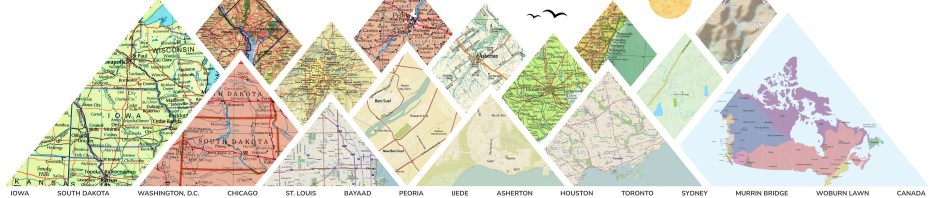
Becoming a Human Being

Because Wayne and I and our family moved so often from one culture to another, and we were there to work side by side with the local people to make a difference in their community, we had to learn how to become trusted, not just as outside “experts”, but as human beings.

What we discovered was that the process is vastly different in different cultures. Mostly we became human beings to the local people by lucky accident.

In Egypt, one day I was visiting a local leader, Sheikh Mustafa, with my Egyptian colleague Ragia. As we were talking with him about the development project, he said, “You don’t know anything about our situation, you are an “abla” – an educated foreigner.

I said in my very limited Arabic, “La, ana felahah!” “No, I’m a farmer!”.

“Mishmumpkin”, he said. Impossible. You are only an educated foreigner.

“La, ana felahah! I can milk a cow!”

“Right,” he responded. “You go in my back room and milk my cow and I’ll give you milk in your tea.” (a real treat in rural Egypt).

So I went in his back room and milked his cow. Not only did he give me milk in my tea, he went to my husband and offered him a buffalo and a cow for me! Sheikh Mustafa was a joker, and this was a joke, but he was saying that I was a valuable human being, and we had made a connection. I was not just a foreigner, but someone that could be treated as a colleague.

With the women in the Egyptian village, I was a human being because I had a son, luckily named Aaron which is Haroon in Arabic, and I was willing to be called “Om Haroon”, in the tradition of calling women “the mother of “ their oldest son.

Wayne became a human being in Egypt by getting his hands dirty side-by-side with other men, and exchanging cigarettes with them in a familiar ritual.

As those who know me will recognize, I’m an extreme extrovert, and usually am the first one to speak and greet someone, and am not shy to insert myself into a conversation. In Murrin Bridge in Aboriginal Australia, there was an elder that I really needed to work with. She had had very bad experiences in residential school, and was wary and prickly with whitefellas. One day, after lunch, I went over to her house to talk with her. Her door was open, but she was intently watching the soap opera on television. Against my usual nature, mostly because I was a bit afraid of her testiness, I stood at her door quietly, not even announcing my presence, for some time. Eventually she looked around and imperiously motioned me to come in and sit down. I did, saying nothing, and watched the rest of the show with her. At the end she started to talk to me, and from then on we were close friends. We were partners in teaching Aboriginal language and culture in the schools. She even shared bush meat with us that her son had brought for her, and the instructions on how to cook it properly. (Tikarpila, or echidna, spiny anteater. You must not cook tikarpila over a flame, because if the fat drops into the fire it will call evil spirits. You must cook it in a hole, that’s its place. An oven can be a stand-in for a hole in modern life.)

By accident, I had stumbled on a cultural pattern that was expected of someone that was a respectful human being – to stand at the edge of the circle or home and wait to be recognized and acknowledged before coming in to become part of the group. Once I understood it, I used this pattern over and over.

In Mexican South Texas, white folks go up to each others’ doors and knock or ring the bell when they want to meet with someone. Mexican folks stay in their cars and honk until someone comes out. Each group thinks the other is rude in their behaviour.

We were reflecting on these practices when we were working in the community, and read a book by Oscar Lewis that provided insight into this pattern. Mexican tradition indicates that no one comes up to your house uninvited except your relatives or your “co-padres”, your children’s baptismal parents. These people are family and allowed free access. So the polite thing to do, if you are not related, is to stay at a distance and let people know you are there. You might be invited in after that. Children are exempt from this expectation, because they don’t understand.

There was a young family across the highway from us that we needed to work with, but they were politically from a different group in the community and were hard to contact. They happened to have a son in kindergarten with Aaron, and one day Aaron asked if he could go across the street to play with Cesar. I said he could, and I walked him across the highway and said, “I’ll come and get you later, because it isn’t safe for you to cross the highway.” Later, I went to get him and was invited in because my son was there.  Once I was invited in, I was treated like family, and we became friends who could work together. The ancient custom worked in reverse – if I was in the house, then I must be part of the extended family.

Now these are distilled stories, picking out the most visible behaviours. It would be a mistake to take these at surface level – they are only indicators. In fact, there were many more subtle ways that we became human to people. In some places we lived, it was harder to discern what was the real key to being trusted as an equal, and in those places we had less success in facilitating participatory community development.

I’ve taken these lessons about becoming human to my work with organizations and individuals. Each organization or group has a different culture, and different (usually unconscious) patterns that give clues of whether you are a trusted human being.

In Aboriginal groups, I suppress my urge to talk, and do a lot of just hanging out and being. Because of my white hair, I often get seen as an elder, so I am very careful that everything I do or say is carefully considered, so I don’t abuse the respect.

In a university group, I happily use my most extensive vocabulary, and either allow or join in with vigourous dialogue and argument.

In a corporate setting, I make sure I pay attention and give appropriate respect to the power structure of the organization, even as I encourage the participation of all levels of the organization together.

With introverted people, I don’t just walk into their office and begin to talk. I stand at the entrance and wait until they recognize me and invite me in.

Again, these could easily be taken as stereotypes at surface level, but they are some of the most visible clues that can catalyze reflection on cultural values at a deeper level.

Becoming a human being not only allows collaborative work, but enriches my understanding of the many different ways of being human.

Posted in Facilitation Stories, Personal Stories | 1 Comment

Little Miss Muffet’s Legacy

Once when I was young and naïve, I was a counselor at a summer camp. (Summer of 1972, Lake Geneva.) My “class” was a group of 4-year-olds. I had been using the art-form or focused conversation method in my teaching, so I decided to try to use it with these little ones.

I decided to use the nursery rhyme “Little Miss Muffet” as my starting point. First we said it all together:
“Little Miss Muffet
Sat on a tuffet,
Eating her curds and whey.
Along came a spider
And sat down beside her
And frightened Miss Muffet away.”

First I asked them who were the characters. “Miss Muffet and the spider.”
Then I asked them what words they didn’t understand and explained that a tuffet was something to sit on (like a tuft of grass), and that curds and whey were cottage cheese.
Then I asked them what happened first, then, and then….. They responded with the stages of the plot.

My next questions were “What does this remind you of? ” and “Where has something like this happened to you?” I got several stories of spiders and ants in their tents, and other scary surprises. There were also a few tough-kid stories of not being afraid.

Then I asked, “So what is this story about, for you?” There was a short silence. Little Dana Caruso looked blank for a minute, then her eyes lit up. “It’s, it’s about when something scary happens, you can decide whether you are going to run away or not! And, and, next time I’m going to think before I run away!”

I didn’t even have to ask the final question, “What will you do differently because of what you’ve learned from this story?” – she had answered it.

Now Piaget would say that 4-year-olds could not think at this level. But when you ask the questions in order, it is like peeling back the layers of an onion, and even small children can take a step deeper in understanding.

I use this story when I’m teaching the focused conversation to adults – I have them answer the questions as themselves (what it reminds them of often includes when a really scuzzy sort sits down next to them in a bar… or something similar) and then tell them how the 4-year-olds answered it. The power of the method to unlock deeper thinking becomes clear to them.

Posted in Facilitation Stories | Leave a comment

Inclusion — the “Jacques Story”

“We need everyone’s wisdom for the wisest result.” Sounds like a naive statement. But when the stakeholders in the results are participants in creating them, not only are the results better but the group itself has the potential to be transformed.

Once, sometime in the 1990’s, I was working with a client, a non-profit agency in a small remote community that served developmentally challenged people, to design a participatory strategic planning process. I asked them who had a stake in or were affected by their plan. They listed staff, board, and family members of developmentally challenged people. “Oh, and of course our clients.” I then asked who would be participating in the workshop. “Parents, staff, board… But not our clients, because this is an intellectual process.”

I asked them to reconsider, and they decided to invite several “higher functioning” clients, by which they meant “better behaved in a group”. One of these participants was Jacques.

We started with a vision workshop. The focus question was “What do we want to see in our community in 5 years, especially for developmentally challenged people?” I gave them time for individual brainstorm, then broke into small groups to write cards, with one labelled person in each group. While they were working, I went to the back of the room for a cup of coffee. Jacques, who was wandering around the room, came up to me and grabbed my arm. “Tree!” He said to me urgently. “You hear? You hear?”

“Yes, I hear, Jacques. Go on.” (He did have a hold on my arm, after all.)

“Tree! Forest! Fall down, die. Bring workshop, make furniture. You hear? You hear?”

“Oh yes, I do hear, Jacques. Come over to your group.” I gave him a green marker and a card and asked him to draw his tree on the card. I told the group what he had said, and they understood what he meant. What he meant was that people who were marginalized and considered dead and useless would be brought into the community and made a useful part of it. But he could only speak in metaphor.

When his card came up on the wall, it clustered with the other cards that were pointing to an inclusive community. The group was amazed that someone like Jacques could contribute meaningfully to their work.

The next workshop was Obstacles. The focus question is a bit more abstract — “What is blocking our vision?” Jacques wandered around through the whole small group work, and I thought we’d lost him. “Oh, well, at least he was able to contribute to part of this work.”

But then I started reading the obstacle cards out loud and putting them on the wall. Suddenly Jacques jumped up and shouted “Ring ring ring!” Everybody slumped down, thinking “there goes Jacques again.” But someone on the other side of the table said, “Oh I know what you mean, Jacques! You mean the fire drill we had last week!”

“You hear, you hear!” cried Jacques. “Ring, ring! Everybody go out! Cold! Can’t get back in!”

I gave Jacques a red marker and a card and asked him to draw the fire bell. What Jacques meant was that there were physical barriers keeping people excluded. His card grouped with others that pointed to physical barriers to inclusion in the community.

By this time the whole group was in awe at Jacques’ contribution, and started to understand how everyone has wisdom that is useful to the group.

Eight years later I had incorporated this story into my teaching about facilitation. I was asked to teach the course in the same community. I wondered if I should tell the story there, since it might have involved people in the room. I decided to use it, to see what would happen.

Sure enough, a woman came up to me at the break and said, “That happened here, didn’t it?” I nodded. She said, “I want to tell you what difference Jacques’ participation made. That was the turning point for a 180 degree change in our organization. Before that time, we created programs and slotted our clients into them. Jacques’ participation let us see that our clients knew what they wanted in their lives. It took us 5 years to change, but now we start by asking our clients what they want and creating supports around them. It still looks much the same to an outsider, but the starting point is completely different, and everyone, especially our clients, is much more satisfied.”

When you are designing a facilitated event, consider who all has a stake or will be affected by the results of the work, and include them as participants.  Examine your own first assumptions that someone cannot participate, and find ways around them.  Not only will the results be wiser, but the group or the organization just may be transformed by their participation.

Posted in Facilitation Stories | 1 Comment

The Making of an Ordinary Revolutionary, Part 3

While the water project was progressing, we also initiated economic and social projects.

Since I had a degree and a passion for education, I was assigned to start the preschool. I spoke no Arabic, so I managed to get a few key words translated and began to gather a motley group of women who were interested in learning to become preschool teachers. There were the young unmarried ones, maybe 17 years old, like Moza and Gamalet. Magida, Om Gedullah, was an indomitable grandmother. Nadia and Wagida were of Nubian, black African descent. All of these women were willing to risk their social status in the community to do something no woman there had done before.

We had very little money, so we improvised. An older woman first donated the use of her front room. We bought a couple of plastic potties, a ream of paper, and 3 boxes of crayons. Luckily, since I had no Arabic, I could not speak to the kids, so I had to dramatically act out what to do, and the teachers made it happen. This prevented me from taking over, and made my work catalytic.

We tore the paper into half sheets, broke the crayons in half, and gave them to the kids. They had never seen a pencil or crayon before and scribbled happily, teachers joining in.

When I could get translation, and as my Arabic improved, the teachers and I began creating curriculum together.

One week the curriculum was about families. By this time we were in a cavernous dusty space built as a youth building, the nadi. We needed dolls, but there were none in the community. One of the teachers showed us a place where we could get clay that was used to make clay water jars. The teachers brought a big tub of clay and water to the nadi, and the first day’s lesson included making small dolls of clay and setting them out in the sun to dry. After class we all went to all the tailors in the village and begged for leftover scraps of cloth too small to use. When the dolls dried, we wrapped them in the scraps of cloth and played house with them. The teachers had never had dolls before, either, so sometimes it was not clear who was playing more, the teachers or the children.

Another time the curriculum was about life cycles. Birth was not difficult, as the children had all seen animals giving birth, although nobody talked about what was going on. We persuaded an old man named Barraket (“blessing”), who had Parkinson’s disease, to come and talk about what it was like to grow old. A hush descended on the group, as the children and young teachers thought about aging.

Death was the hardest topic in life cycles. We took the whole preschool out of the nadi to the edge of the desert, and stood in a circle. Wagida, old and wizened like a witch, lay down in the sun and dirt and lay very still until everyone thought she was really dead. Then we led a reflective conversation on death.

One day the government-appointed village administrator came during preschool class time to inform us that he had decided to turn the nadi into a garage for the government tractor, and that we would have to evacuate the building the next day. We had no other options at that point, since the village had no other vacant space. I strategically cried as I told him about the impact of the preschool on the community. He was helpless to resist the crying of a foreign woman, and gave us a month to find a new place.

Eventually someone offered an uninhabited mud house in the centre of the village, but it had no roof. We canvassed the farmers to get sorghum stalks and balanced them on sticks across the top of the walls to provide shade.

Meanwhile, someone started up an adult Arabic literacy class in the village, and my teachers as well as a few other women could be seen slipping across the village to the school in the shadows at dusk. By the end of a year and a half, the teachers were not only running the daily classes, but were also literate and planning curriculum on their own.

Village women in Egypt are known by the name of their oldest son. My village name was “Om Haroun”, “Mother of Aaron”. Every time someone called me that, I felt a knife through my heart, I missed my son so much. About 7 months into the project, we had clean water in the village and a safe place to live, and we decided it would be safe for our now almost 2-year-old to be with us.

So one day during the Khamsin, the 50 days of strong winds at the end of March, I was on my way to Cairo on my own to return some borrowed books. I was to send a telex asking if Aaron could be sent with a new couple that was coming. I had never traveled on my own in Egypt, so I procrastinated leaving. Wayne was sick in bed. The air was heavy with dust and humidity. Finally, in late afternoon, Nadia’s brother Jamel was ready with his felucca to take a load across the Nile. I sat in the boat with my heavy bag of books, head down, worried about the trip. Suddenly, in the middle of the Nile, I heard someone shouting my name, in English! “Jo! Jo Nelson!” I looked around, and there in a felucca coming the other way, was the new couple, Jean and Mark, and between them, a small, very white, fat child. Suddenly I was standing in the boat, calling out “Ebni, ebni! – My son, my son!” All the villagers in both boats started shouting “Haroun! Haroun henna! — It’s Aaron! He’s here!”. The boatmen brought the two boats together in the middle of the Nile and I jumped ship and went back to Bayad.

Normally when a child of that age is separated from his parents for that length of time, it takes a long time for them to connect again. Aaron was calling Jean mama. I somehow managed to corral the one taxi that served Bayad and bundle us all into it. As we bounced the mile to the veterinary building where we lived, I winked at Aaron in Jean’s lap. He winked back at me. By the time we got to the biteraya, he came to my arms and called me mama. Then he asked, “Where dada?” As we went up the stairs, all our staff came out to welcome the newcomers. As he saw each man, he said “Dada?” and I had to say no. Eventually we made it to our room. Wayne got out of bed in his galabaya (Egyptian farmer dress) and I said, “There’s Dada!” Aaron took one look at him in the long skirts and buried his head in my shoulder. I said to Wayne, “Quick, put on a pair of pants!” and he did. Aaron looked at him in pants, said “Dada!” and went to his arms.

By that time, all my preschool teachers were gathered under our window, calling out “Haroun! Auseen shuf Haroun! – We want to see Aaron!” I held him up to the window and they jumped up and down shouting “Gameel – Beautiful!” Needless to say, when he went to preschool the next week, they spoiled him mightily.

There is much more to this story, but let me draw it to a close here for now. Before I went to Egypt, I thought I was generous. When people went hungry in order to share food with me, I learned radical generosity. I thought I was dedicated to development, until I learned from Abdel Hamid that dedication means taking great risks – and loss — to make a better future. I thought I was passionate about education, until I worked with women who were willing to risk their entire social status to become preschool teachers. I thought I was selfless, until I saw that what I was getting back from my work was more than I was giving.

Now I know deep in my being that every single person has wisdom about what they want and need, and my job in history is to draw that out to form consensus and commitment to take them into the future.

Posted in Facilitation Stories, Personal Stories, Stories of Ordinary People Making a Positive Difference | 1 Comment

The Making of an Ordinary Revolutionary, part 2

In the 1970’s, it was radical to believe that villagers had any knowledge about what they needed to develop their community. We began the project with a comprehensive participatory planning process that included a cross-section of villagers as well as some Egyptian and international volunteer “experts”. In the mornings, we visited every house and asked people the question of the day – what they wanted to see in the future, what was blocking that from happening, what strategies they could do to deal with the obstacles and realize their vision. In the late afternoon we held a plenary session to bring all the ideas together. The plenary was held in a tent in the middan (plaza) made of bright red, yellow, and green quilted wall hangings. The first afternoon, the men were gathered at the front of the room, and a few village women in black were huddled at the back, present but saying little. A huge gust of wind blew through and knocked down all the chairs and the blackboard. A little sleight of hand from one of my colleagues and suddenly the front of the room materialized where the back had been, and the women were at the front of the room! Several of those women who had the courage to come to the meeting, participate, and push the boundaries later became my preschool teachers.

It was clear from the consult results that the highest priority for the community was clean water. “Maya fee Bayad” (Water in Bayad) became a rallying cry. Bayad is a village perched on a limestone shelf on the eastern bank of the Nile, in a very narrow strip of land that from ancient times had flooded every year with the Nile cycle. This was the only source of water, since it rarely rains more than an inch in any year. Cavities in the limestone that captured the water were refilled by the Nile every year and were wells used for irrigation. When the Aswan High Dam was built, suddenly there was no more flooding, no more refilling of the wells. For more than 10 years, every drop of water for drinking, cooking and washing or for growing food had to be carried by hand or on heads from the Nile. When irrigation ditches were finally constructed, the stagnant water in the ditches became a wonderful habitat for the snail that is a host of bilharzia, or schistosomiasis. Just walking in the water makes one subject to infection, as the microscopic fluke passes through the skin, then lays its eggs in the liver. People are debilitated for years, before finally the liver is destroyed. When woman and children went to the canal for water, often the donkey carrying the water jugs waded into the water, and water next to him was scooped into the jugs.

Educated people said that village people (fellahin) were ignorant about water-borne disease. Village folk knew exactly what was happening to them. However there are no trees in Egypt, no money to buy extra fuel to boil water, and humans cannot survive without water!

So although we began working on strategies to create solutions to a wide range of challenges in the community, the first focus was on getting clean water. Everyone said it was impossible, that there was only rock under the village.

Gene Boivin was a wild, creative older American on our staff. He and a small group of volunteers, both Muslim and Christian, from the village began together to explore ways to deal with the water problem. Gene found a drawing of a hand water drill in a book on appropriate technology, and went off to Beni Suef to get a welder to create it.

The first try was on the edge of the village. Clunk! The drill immediately hit stone. A few days later, the Omda (traditional mayor) of the village came to Boivin and said, “I have a small plot of land that is right on the edge of the Nile. There is sand and clay there. Why don’t you try your well there?” So the ragtag group of men and boys carried the drill down to the Omda’s land. They began by digging a hole by hand. A few feet down, they hit moist sand. “Khudra!” shouted young Khalil. “Green!” or “Fertile!” The men immediately dropped the drill into the hole and turned it. Clean water bubbled out! Excitement flooded the village.

Boivin and the crew set up a donated diesel pump, and long lines of village women came for water. Next a coordinating body of volunteer village leaders and our staff organized workdays. On the one day of rest, after prayers on Fridays, the men dug a long trench in the limestone with their turias (stout short-handled hoes) toward the village. Women brought tea. Our staff pitched in sifting sand into the bottoms of the trench to protect the pipes. When the men got tired of working every Friday on the trench, and the number working began to dwindle, the women got together and threatened that they would not carry water until the men were back on the job. The next Friday they were all back.

A crew laid donated pipe in the trench, and connected it to a faucet on the edge of the village. City folk cautioned us, “You can’t put copper pipes and faucets in a village. It won’t be long until someone steals them.” But the villagers had built this with their own energy, and guarded their precious water.

Weddings are the main festive events in an Egyptian village, and the drink served is called “sharbot”. It is like English cordial, bright red, yellow or green and thick with sugar and flavor. To celebrate the water, we held a community-wide ceremony and festival, with sharbot made with the fresh water. The excitement was so widespread people charged the tables to get their sharbot, and the event has remained in memory as “the sharbot riots”.

Abdel Hamid was one of the pioneers of the water system. He was a felucca boatman, who worked long hours poling, rowing, and steering his felucca back and forth across the Nile to support his large family. The water was so important to him that he put his work on hold to volunteer full-time for the water project. During that time, one of his children died of complications from malnutrition. I asked Abdel Hamid later if he regretted having given up his work for the project. He looked at me directly and said, “Yes, I lost a child because of this project. But because we have clean water, my other children and my grandchildren will live healthy lives.” Abdel Hamid is one of my heroes.

Posted in Facilitation Stories, Personal Stories | 1 Comment

The Making of an Ordinary Revolutionary — part 1

The first installment of the 3 submissions I made to the writing class on Memoirs and Travel Writing — unedited

It was June, 1970, I had just graduated from university, and I was standing in the living room of my grandparents’ house on our family farm in Iowa. My grandfather asked me what I was going to do now I had finished school. I told him I was going to teach school in inner city Washington, D.C., and volunteer with the Institute of Cultural Affairs, an organization that was doing church renewal and community development. I was going to make a difference in the world. My grandfather, who had lived nearly 90 years in the house where he was born, was skeptical.

“Jo, you can’t change the world by yourself!” he admonished.

“I know, Grandpa. That is why I am joining a group that is doing it.”

Grandpa was not impressed but he let it go.

I didn’t know at the time where my naivité and chutzpah would take me, or what I would learn from the attempt to make a difference.

In 1976, our colleague Fred Buss asked my husband Wayne and I to join a team that was starting a new human development project in Egypt. Since we had both grown up on farms, we had a lot of practical skills, and we were eager to contribute and see the world, so we accepted the invitation.

The first challenge was that we had a 14-month-old son, Aaron. We had no place to stay yet in Egypt, and the village that we were going to did not have clean water or electricity, so it was clear that we could not take an infant with us. When we were successful in getting clean water and a safe place to live, we could send for him. We found a colleague that we trusted deeply, and she agreed to take him for an undetermined period of time. We put him on a plane in Chicago with another colleague, who took him to Houston to Jill and her husband. As we sat in the airport restaurant, my heart was breaking, but I was also excited about the impending assignment. After all, we were going to make a better world for our son to grow up in, weren’t we? Little did I know that we would gain at least as much as we could give.

I remember very little about the first few days in Egypt. We arrived in the evening. The airport was full of Egyptian soldiers in white cotton uniforms, carrying machine guns, as there were tensions with Israel and Sudan, and some kind of incident had happened a few days before we arrived. By the time we left the airport, it was dark. The long road into Cairo proper was lined with little shops with bright strings of coloured lights and hundreds of people milling about happily.   We did not understand then, but was the beginning of Ramadan, and people were out breaking the fast.

Our colleagues greeted us at the tiny dark Windsor hotel in central Cairo that had begun a hundred years before as the British Officers’ Club. Within a few days, we had moved to Bayad.

Bayad was a small village on the east bank of the Nile, in Beni Suef governate. As Salah drove us down the main west bank road, we stared at the mud-brick villages, the green of one tiny irrigated field after another along the canals, the donkeys pulling handmade plows followed by farmers in turbans and long flowing gowns, women swaying gracefully with large clay jars balanced on their heads, and naked little boys diving into the irrigation ditches.

The Coptic Church had invited us to Egypt to do participatory development in a village that was so close to half Coptic and half Muslim that both sides claimed a majority. While we waited for the final government permissions to be in the village, we lived in an ancient Coptic monastery retreat centre on the edge of the Nile, just outside of Bayad. To get there from Beni Suef on the west bank, we took a felucca, an ancient sailboat, across the Nile. When the wind was calm, the passengers all took up oars and rowed the boat against the strong current.

Once we had permission, we began visiting in the village. The homes were mostly made of mud bricks, but a few were made with white limestone blocks from the nearby quarry owned by the Coptic Church – a rarity in rural Egypt. Just inside the front door of each home was a main room for visitors with a mud mastaba or step, for sitting or sleeping. Those who could afford it covered the mastaba with a quilt and pillows. A faded and dusty photo or poster on the wall gave a clue to the identity of the family – a picture of the Virgin Mary signaled a Coptic family, while elegant Arabic calligraphy meant a Muslim family. Farther inside was the kitchen area, which was off-limits to men not of the family. Even farther back was the stable, which might hold a cow, or chickens, or a water buffalo. This room also served as the indoor bathroom, since there was no plumbing.

Each time we visited a house, we were made to sit and drink tea. “Shrop chai?” was the common invitation – “drink tea?” A small kerosene stove would be brought into the room, along with a small saucepan filled with water. As the water began to boil, the host, usually a man, measured loose black tea generously into the water. He added much sugar, and the mixture boiled vigourously for a while. Then he cooled the tea by pouring it back and forth between the pot and a glass until it had cooled enough to pour it into small glasses and hand it out. Often there were not enough glasses to go around, so the first person would gulp down tea at the risk of seriously burning their mouth so that the next person could have some.   I was told that to refuse tea would be an insult. I didn’t really understand this well until one day Ragia and I were visiting a family to talk to them about the project, and the woman of the family went in and out of the house several times as she was preparing to make tea. Ragia told me quietly in English that she was so poor that she did not even own a stove, so she had to borrow the stove, the pot, the tea, and the sugar in order to make us tea. Of course, we drank the tea with deep gratitude for the hospitality.

Posted in Facilitation Stories, Personal Stories | 1 Comment

Original Intent of The Journey of Facilitation

The field of Process Facilitation has only been named as a professional field over the last 20 years.  The professional association, the International Association of Facilitators, began in 1994. But the art of guiding groups in meetings to engage people and to accomplish group tasks has been around for a much longer time.  I have been fortunate to be a part of this field for more than 40 years.  These are my occasional musings on the development of the art and the trend toward meaningful participation in decision-making from my personal experience.

Posted in Facilitation Stories, Uncategorized | Leave a comment

Broadened Intent for this Blog — more like “Memoirs and Travel Writing”

The intent of this blog has changed somewhat since I set it up, and since I haven’t posted yet (!!), I am going to post with the following intent:  these stories are stories of my life as a facilitator, including participatory community development, teaching and working with schools, and any other life stories that come to me.  They will be posted as they come to me, with time markers where relevant, so that at some future time they could be assembled in some kind of order.

Wayne’s unexpected death last January made me realize that intellectual knowledge, or stories, that are held only in the head of a person can suddenly disappear and be unavailable.  I don’t know if my stories will be useful or not, but at least they will be accessible.

I was inspired by a writing course I took with Ann Ireland on “Memoirs and Travel Writing”, and the first posts are the unedited submissions I made for that course.

Posted in Personal Stories, Uncategorized | Leave a comment